Boat licences in the EU: the new tourism strategy only announces a proposal. What applies in six countries
The EU tourism strategy of 4 November 2026 only announces a proposal on UNECE Resolution 40. Licence rules: France, Italy, Spain, Croatia, Greece, UK.

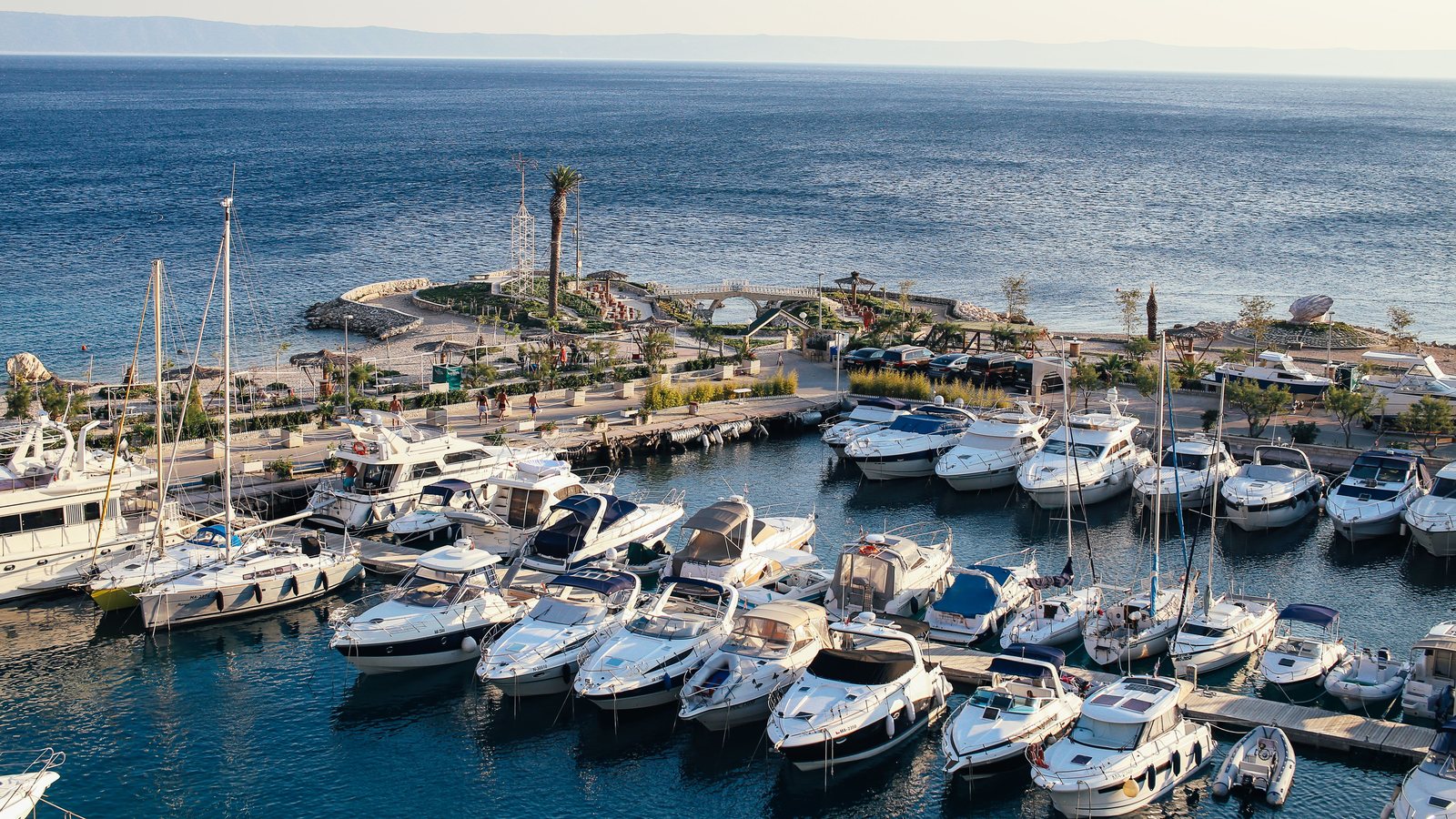
The European Commission presented its EU Sustainable Tourism Strategy on 4 November 2026. On boat licences, it states an intention, not a decision. The Commission "will seek to harmonise" … "with a proposal for a Council Decision to apply UNECE Resolution No. 40 on an International Certificate for Operators of Pleasure Craft". That proposal is a later step. According to the Commission's 2025 study, there is currently no harmonised EU legislation on skipper's licences for recreational boats. What you need therefore still depends on the country, and France, Italy, Spain, Croatia, Greece and the UK each have their own rules.
This guide is for captains and crew who run boats in more than one country. It is based on:
- the strategy (COM(2026) 777 final) and its staff working document;
- the European Parliament's file on the strategy;
- a 2025 study on the mutual recognition of boating licences, published by the EU Publications Office;
- the text of Resolution 40;
- national texts from France (mer.gouv.fr), Italy (Gazzetta Ufficiale), Spain (Royal Decree 875/2014), Croatia (the ministry at mmpi.gov.hr) and Greece (General Port Regulation No. 50).
For the UK we use gov.uk. Pages of the Royal Yachting Association (RYA) are cited as a second source. This article summarises official texts; it is not legal advice. Jet skis and jetboards are covered in jet ski rules from Spain to the Caribbean and do you need a licence for a jetboard?.
What does the EU tourism strategy say about boat licences?
The strategy is a "Communication from the Commission" to the European Parliament, the Council, the European Economic and Social Committee and the Committee of the Regions (COM(2026) 777 final, 4 November 2026). It describes the problem on page 8: "An obstacle that visitors experience when travelling by leisure boat in the EU is when recreational boating licences are not recognised across countries."
The announced measure starts on page 8 and continues on page 9. The Commission "will seek to harmonise" … "this system with a proposal for a Council Decision to apply UNECE Resolution No. 40 on an International Certificate for Operators of Pleasure Craft." The Commission presented the strategy that day (DG Mobility and Transport, news of 4 November 2026).
The accompanying staff working document goes into more detail on page 116 (SWD(2026) 777 final):
- The problem: "Boater licenses issued by one Member State are not necessarily recognised by another Member State's authority which may cause additional complexity and burden for boaters and businesses."
- Why it is complicated: Member States apply differing requirements for training, testing and recognition of licences depending on "vessel size, engine power and operating area (coastal/inland)".
- The Commission's assessment: applying Resolution 40 "would bring about major simplification in that regard".
What kind of document this is: before publication, the European Parliament's Legislative Train page said the Commission had announced "a non-binding strategy" on sustainable tourism (status 25 October 2026). The Parliament itself had adopted a resolution on the topic on 28 April 2026 (European Parliament, Legislative Train).
According to the industry association European Boating Industry, that resolution "calls on the Commission to follow up on the study assessing the advantages and drawbacks of a possible mutual recognition of boating licences for recreational boat operators by proposing a regulatory measure". The association speaks of "approximately 48 million European boaters" (European Boating Industry, 28 April 2026).
What is UNECE Resolution 40?
Resolution 40 is the basis of the International Certificate for Operators of Pleasure Craft, usually called the ICC (Resolution No. 40, Revision 4, ECE/TRANS/SC.3/147/Rev.4, 2015):
- Origin: "adopted by the Working Party on Inland Water Transport on 16 October 1998"; the current text is Revision 4.
- Purpose: it addresses "operators of pleasure craft including bare boat charter vessels in the waters of foreign countries".
- Minimum age: applicants must "have reached the age of 16".
- Country list: the resolution provides for the list of countries applying it to be kept "up-to-date for the Working Party's sessions".
Two points from the RYA, as a second source (RYA, About the ICC):
- "The ICC is valid for 5 years."
- On revalidation: "One of the most important reasons for requiring periodic revalidation, however, is to counter the fraudulent use of the ICC, which is on the increase."
Which countries apply Resolution 40, according to the EU study?
The 2025 study gives two different figures (EU study, final report):
- Page 86 says Resolution 40 "has been ratified by 14 out of the 27 Member States and the ICC is recognised by more states even if they have not ratified it".
- Page 41 lists the states that "have ratified the Resolution 40 and issue and accept licences in accordance with it".
We therefore do not reproduce the study's list. For the countries in this guide, the study says:
- Croatia is on the page 41 list of ratifying states.
- The UK: "Switzerland and the United Kingdom have also done so" (page 41).
- France "has adopted the predecessor of the Resolution 40, Resolution 14. However, the adoption of Resolution 14 by France has not resulted in the adoption of the ICC" (page 41).
- Greece, Spain and Italy are among the states that "have not ratified the ICC resolution" (page 41).
- Italy: the "ICC is not issued and is not recognised in Italy" (page 44).
- Spain "has not adopted the regulation, but the ICC is recommended for sailing in Spain as Spain recognises the ICC" (page 44).
- Greece "does not recognise the International Certificate of Competence (ICC), it does acknowledge the validity of all EU licences" (page 33). The study adds that Greece requires all certificates to be "translated into the Greek language" (page 44).
The study also states: "Most Mediterranean and coastal countries have not accepted the ICC" (page 44).
Who decides in practice: "In many cases, each situation is evaluated individually, with the harbour master, charterer, or insurance company making the final decision on licence acceptance" (page 36). The interviews in the study give two examples:
- Spain: charter companies said that "when renting a boat, the insurance company plays the most important role" (page 33).
- Italy: "the charterer consults with the boat's insurance company" (page 34).
The study also found that businesses such as charter companies "struggle with inconsistent regulations across Member States, adding complexity and administrative burdens" (EU Publications Office, study page).
What did the study recommend?
The study was released on the EU publications website on 13 November 2025. By its own account, it "does not constitute an Impact Assessment, as it does not follow the Commission's IA methodology" (page 4). Its starting point: "Currently there is no harmonised EU legislation regarding the skipper's licences for non-professional recreational boats" (page 85).
It assessed several policy options (page 10):
- Option 2 "proposes an EU directive requiring Member States to mutually recognise ICC certificates issued under UNECE Resolution 40". The study calls it "the most practical and politically viable solution" because it strikes a balance between feasibility, economic benefits and minimal legislative disruption.
- Option 3 it rated "less practical in the short term despite its long-term benefits".
The strategy names a different instrument from the one described in Option 2. The study's Option 2 describes an EU directive on mutual recognition. The strategy announces a proposal for a Council Decision to apply Resolution 40.
Six countries at a glance
| Country | National source used | Resolution 40 / ICC according to the EU study (2025) | What the national source says about foreign licences |
|---|---|---|---|
| France | mer.gouv.fr | Adopted Resolution 14, which "has not resulted in the adoption of the ICC" | A French motor boat can be driven with a foreign title "sous certaines conditions", recognised under the arrêté of 6 July 2011 |
| Italy | Gazzetta Ufficiale | Not ratified; ICC "not issued and is not recognised" | Holders of a licence recognised as equivalent by their home state may command "a titolo gratuito" (free of charge) |
| Spain | Royal Decree 875/2014 | Not ratified; "Spain recognises the ICC" | Renting Spanish boats: licence from the country of nationality or residence, if in the EEA or listed in Annex IX |
| Croatia | Ministry table of accepted licences; ministry nautics page | Ratified; issues and accepts licences under it | ICC accepted on Croatian-flagged boats for personal use and for bareboat charter, if valid for "Coastal waters" |
| Greece | General Port Regulation No. 50 (2013) | Not ratified; ICC not recognised, "all EU licences" valid | A corresponding foreign licence "is accepted"; an official translation with a certificate must be carried |
| UK | gov.uk (British Embassy Athens note, last updated July 2021) | "Switzerland and the United Kingdom have also done so" | The UK Government "has accepted Resolution 40"; the RYA is authorised to issue the ICC |
What applies in France?
All points in this section come from the French maritime administration (mer.gouv.fr, le permis plaisance):
- When a licence is required: the permis is mandatory for a motor pleasure boat when the engine power exceeds "4,5 kilowatts (6 chevaux)".
- Sailing boats: "La conduite en mer des navires à voile n'exige pas de permis". Sailing vessels need no licence at sea.
- French flag: "c'est la règlementation française en matière de titre de conduite qui s'applique même dans des eaux étrangères". French licence rules apply on a French-flagged boat even in foreign waters.
- Foreign licences: driving a French motor boat "est possible avec un titre étranger sous certaines conditions". The foreign title must be "reconnu valable selon les dispositions de l'arrêté du 6 juillet 2011 relatif aux équivalences avec les titres étrangers".
- No international licence: "Il n'existe pas de permis international maritime en matière de navigation de plaisance". According to the French administration, there is no international maritime licence for pleasure navigation.
The local rules on the coast are in rules for yachts on the Côte d'Azur and in Monaco.
What applies in Italy?
The following rules come from the provision shown on the Gazzetta Ufficiale page (Gazzetta Ufficiale):
- Foreign skippers: foreigners and Italian citizens resident abroad may command if they hold a licence or a document recognised as equivalent by their state of nationality or residence. The condition is "purche' a titolo gratuito", provided it is free of charge. The provision therefore covers commanding without payment.
- Foreign flag: for units under a foreign flag, "l'obbligo di patente nautica e' regolato dalla legge dello Stato di bandiera dell'unita'". The licence obligation is governed by the law of the boat's flag state.
Charter rules and flags in Italy are covered in chartering in Italy.
What applies in Spain?
Spain's rules are in Royal Decree 875/2014, last amendment published on 30 December 2025 (BOE, RD 875/2014):
- Renting Spanish boats: the licence "deberá estar expedido por el país de su nacionalidad o el de su residencia". In addition, that country must belong to the European Economic Area or be listed in Annex IX of the decree. Annex IX ("Títulos expedidos por otros Estados") lists, for example, Andorra.
- Professional certificates: Spanish boats can also be rented without crew for recreational navigation to people holding "un título profesional en vigor expedido por un país firmante del Convenio STCW". This means a valid professional certificate issued by a country that has signed the STCW Convention. See our STCW basic safety training guide.
- Foreign flag, skipper's nationality matches the flag: the qualification required is the one under "la legislación del país de nacionalidad del patrón", the law of the skipper's country of nationality.
- Foreign flag, nationalities differ: the qualification is the one required by "la legislación del país de residencia del patrón", the law of the skipper's country of residence, or failing that, of the skipper's nationality.
Licence and tax rules for charter in the islands are in chartering in the Balearics.
What applies in Croatia?
Croatia publishes its rules on the ministry's nautics page (mmpi.gov.hr, nautics) and in a table of accepted licences (ministry table, file version 21-5_26).
- Foreign-flagged boats: "All persons operating a foreign-flagged boat or yacht in the territorial waters of the Republic of Croatia must hold a certificate authorizing them to operate such a boat or yacht."
- Flag state without a licence requirement: in that case, operators "must hold a certificate issued in accordance with the regulations of the Republic of Croatia".
- ICC on Croatian-flagged boats: under the ministry's table, ICCs "are accepted for operating Croatian-flagged boats and yachts for personal use, as well as Croatian-flagged bareboat chartered boats and yachts, provided that the certificate is indicated as valid for 'Coastal waters'" (page 3).
- Radio: this applies "under the condition of holding an appropriate national or foreign certificate for operating radio station if there is a radio-telephone VHF station or a GMDSS-VHF station on the boat or yacht" (page 6).
- UK certificates in the table: the Royal Yachting Association's International Certificate (row 67) and the Day Skipper Shorebased Certificate (row 69) are listed (page 29). The EU study also refers to this table: "The Croatian Ministry has developed a comprehensive list outlining which licences are accepted by local authorities."
For charter crew, the English version of the ordinance on charter in the ministry's archive (2017 version) sets three requirements (ministry archive, ordinance on charter):
- The vessel "shall have the minimum number of crew members of adequate qualifications".
- If a crew member's certificate was issued by a state other than the vessel's flag state, the crew member "shall also possess an evidence proving that it has been recognized by the state of nationality of a vessel".
- Crew must comply with the special regulations "governing residence and work of foreign nationals in the Republic of Croatia".
The same ministry page also links a decision limiting cabotage authorisation "to all vessels up to 24m and gulet type yachts", "effective from July 16, 2026". Cabotage and charter flags are covered in chartering in Croatia.
What applies in Greece?
Greece's rule is in General Port Regulation No. 50, published in ΦΕΚ Β 1151 of 13 May 2013 (ΓΚΛ 50):
- Recognition: a corresponding licence issued abroad and held by a Greek or a foreign national "γίνεται αποδεκτή", meaning it is accepted (page 3).
- Translation: the holder must carry "επίσημη μετάφραση", an official translation of the licence obtained abroad, accompanied by a certificate (page 3).
According to the EU study, Greece requires the translation into the Greek language (see above).
What applies in the UK?
A gov.uk information note from the British Embassy Athens, last updated in July 2021, says: "The UK Government has accepted Resolution 40 and has authorised the following bodies to issue ICC certification on its behalf". The RYA is the first of these bodies (gov.uk, pleasure craft certificate information note).
According to the RYA, as a second source:
- Who can get a UK ICC: the UK ICC issued by the RYA "is not available to the nationals of countries that have adopted Resolution No. 40 unless they are resident in the UK" (RYA, About the ICC).
- Professional use: for RYA certificates, "commercial endorsements may be added to these certificates to enable their professional use in relation to UK codes of practice for small commercial vessels" (RYA, MCA recognition).
What a commercial endorsement requires is explained in zero to hero Yachtmaster courses. Professional licences beyond that are covered in from deckhand to captain.
What does the flag decide?
Four of the six national sources link the licence question to the boat's flag, each in its own way:
| Country | What the national source says about the flag |
|---|---|
| France | On a French-flagged boat, French licence rules apply, even in foreign waters |
| Italy | For units under a foreign flag, the licence obligation is governed by the law of the flag state |
| Spain | Foreign flag: the law of the skipper's nationality if it matches the flag; otherwise the law of residence or, failing that, of nationality |
| Croatia | Anyone operating a foreign-flagged boat in Croatian territorial waters needs a certificate; a Croatian one if the flag state requires none |
Sources
- European Commission: COM(2026) 777 final (EU Sustainable Tourism Strategy) and staff working document SWD(2026) 777 final, both 4 November 2026; DG Mobility and Transport news of 4 November 2026.
- European Parliament: Legislative Train, file on the European strategy on sustainable tourism (status 25 October 2026).
- European Boating Industry: news of 28 April 2026 (second source on the Parliament resolution).
- EU Publications Office: study on the mutual recognition of boating licences, final report, released 13 November 2025.
- UNECE: Resolution No. 40, Revision 4 (ECE/TRANS/SC.3/147/Rev.4).
- France: mer.gouv.fr, le permis plaisance.
- Italy: Gazzetta Ufficiale.
- Spain: Royal Decree 875/2014, BOE.
- Croatia: ministry nautics page, table of accepted licences (file version 21-5_26), ordinance on charter (archive, 2017 version).
- Greece: General Port Regulation No. 50, ΦΕΚ Β 1151/13.05.2013.
- UK: gov.uk information note of the British Embassy Athens (last updated July 2021).
- RYA: About the ICC and MCA recognition (second source).
All checked on 9 November 2026 and linked above.
Sources and image rights
- Images
- Rachel Claire / Pexels (conditions)
- Checked
- 10 November 2026 by Andreas Lakeberg
Know something we missed – a rule, a fee, a marina detail? Write to editor@toysandcrew.com. We check every tip against the source and note updates at the top of the story.
Disclaimer. We research every article carefully and to the best of our knowledge. Salaries, prices, rules and port regulations change, and we cannot guarantee that all information is complete, current or correct. Please check anything important with the original source or the responsible authority before you rely on it. To the extent permitted by law, we accept no liability for errors or omissions.