From LY3 to the REG Yacht Code: what changed for large commercial yachts
What LY3 was, who REG Yacht Code Parts A and B cover, when the code took effect and which rules existing LY3 yachts still had to meet.

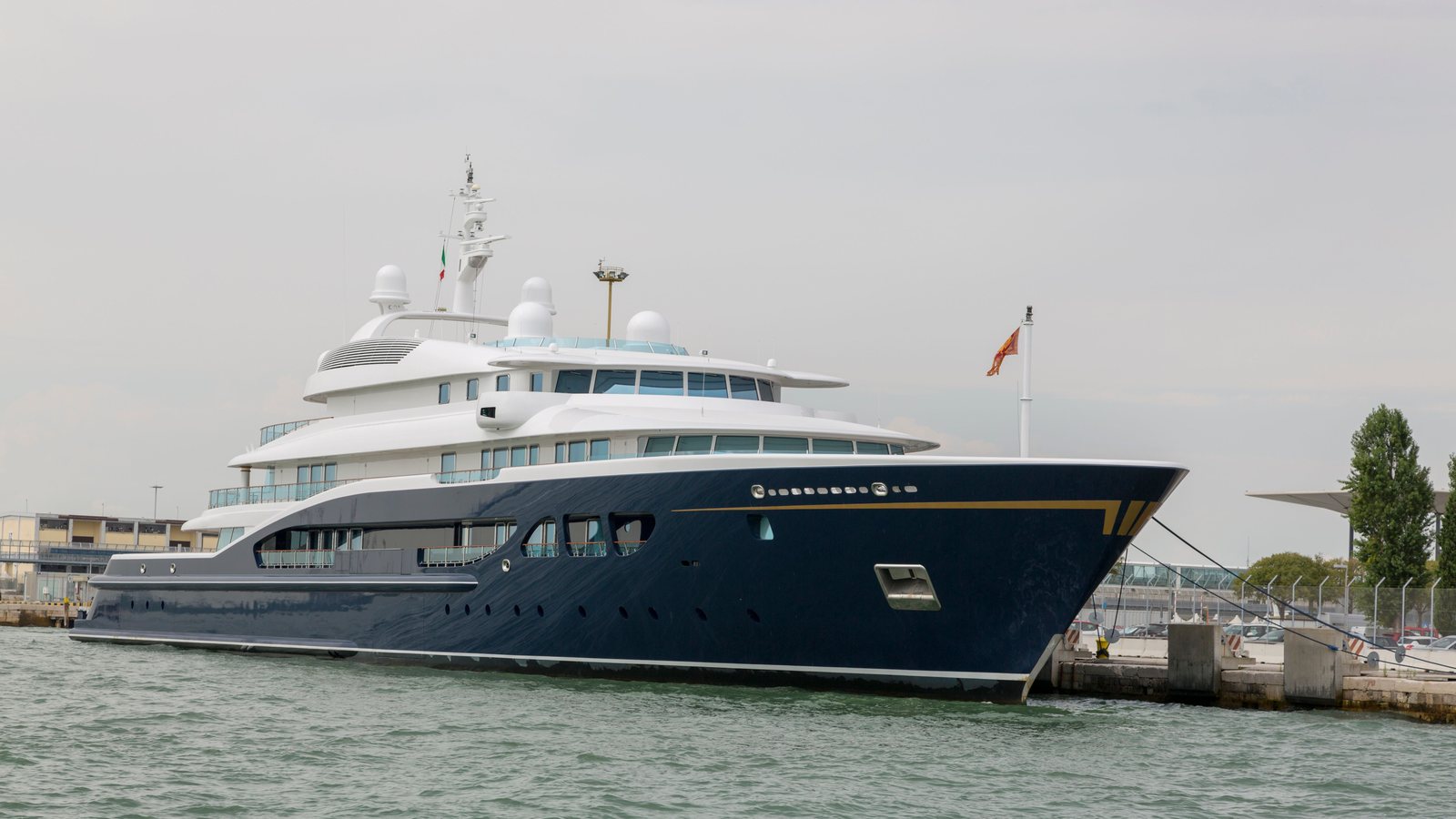
LY3, the Large Commercial Yacht Code, was the MCA's safety code for yachts of 24 metres and over in load line length that are in commercial use for sport or pleasure, carry no cargo and carry no more than 12 passengers. In the UK, it has been replaced by the Red Ensign Group (REG) Yacht Code, which came into effect on 1 January 2019. Under the UK notice MSN 1895, existing yachts under LY2 or LY3 may continue operating to those earlier standards. They must still meet the requirements in paragraph 1.6(2) of REG Yacht Code Part A.
This guide uses the MCA's Merchant Shipping Notices MSN 1851 and MSN 1895, the text of LY3, the 2019 and 2024 editions of the REG Yacht Code, REG guidance, UK legislation, the UK Ship Register and the Isle of Man Ship Registry. This article summarises the official rules; it is not legal advice. Crew certification under the codes is covered in from deckhand to captain.
What exactly was LY3?
MSN 1851 (M) describes LY3 as "the latest revision of the MCA publication, the Large Commercial Yacht Code (LY3)", which replaced LY2 (MCA, MSN 1851). In the UK, it was given legal force through the Merchant Shipping (Vessels in Commercial Use for Sport or Pleasure) Regulations 1998 "with effect from the 20 August 2013".
The code itself sets out its scope (LY3):
- Size: motor or sailing vessels of 24 metres in load line length and over. A vessel built before 21 July 1968 falls under the code if it is of 150 tons gross tonnage and over (section 3.1.1).
- Use and passengers: in commercial use for sport or pleasure, carrying no cargo and no more than 12 passengers. Sail training vessels are included (section 3.1.1).
- "Engaged in trade": the code applies to "pleasure vessels 'engaged in trade'" for the purpose of Article 5 of the International Convention on Load Lines, 1966 (section 1.3).
- "Should" means must: "Any provision of the Code expressed in the conditional (i.e. 'should') shall be a requirement" (section 3.1.3). The UK regulations say the same thing in regulation 4(2) of SI 1998/2771.
In its history of the large yacht codes, the UK Ship Register states: "Chartering is a commercial use of a vessel, and therefore all yachts engaged in chartering activities must comply with the Code" (UK Ship Register). What changes for crew between the two uses is covered in private or charter yacht.
For smaller vessels, the UK regulations use a different term: a "small vessel" means "a vessel of less than 24 metres in load line length or, in the case of a vessel the keel of which was laid or which was at a similar stage of construction before 21st July 1968, less than 150 tons" (SI 1998/2771, regulation 2(1)).
How did the codes develop from LY1 to the REG Yacht Code?
| Date | Step | Source |
|---|---|---|
| 1997 | MCA publishes the Code of Practice for the Safety of Large Commercial Sailing and Motor Vessels (LY1) | MSN 1851, para 1 |
| 24 September 2004 | LY2 comes into effect, according to the UK Ship Register | UK Ship Register |
| 2005 and 2007 | LY2 and LY2 Second Edition, issued as the Annex to MSN 1792 | MSN 1851, para 1 |
| August 2012 | LY3 published; launched in September 2012 at the Monaco Yacht Show | MSN 1851, para 3 |
| 20 August 2013 | LY3 takes effect in the UK | MSN 1851, Summary |
| 13 November 2017 | REG Yacht Code launched at the Global Superyacht Forum in Amsterdam | UK Ship Register |
| 1 January 2019 | REG Yacht Code comes into effect and replaces LY3 | UK Ship Register |
| 1 June 2021 | The 2019 edition including Corrigenda 1 and 2 applies in its entirety to keels laid on or after this date | REG Yacht Code 2019, Part A, 1.6(4) |
| January 2024 | New version of the REG Yacht Code published | MSN 1895, para 1.1 |
| 1 July 2024 | The 2024 edition applies in its entirety to building contracts placed, or keels laid, on or after this date | REG Yacht Code 2024, Part A, 1.6(3) |
| 11 April 2025 | MSN 1895 (M) on REG Yacht Code Part A published | GOV.UK |
| 25 April 2025 | MSN 1851 (LY3) withdrawn and replaced by MSN 1895 | GOV.UK |
| 1 January 2027 | Amended stability criteria (hull openings, floodable tender garages) apply to building contracts placed, or keels laid, on or after this date | REG Yacht Code 2024 incl. Corrigenda 1, Part A, 1.6(4) |
For LY2, the two sources give different years. MSN 1851 dates LY2 to 2005, while the UK Ship Register gives 24 September 2004 as the date it came into effect.
According to the UK Ship Register, LY3 "introduced equivalent requirements for large yachts to the requirements of the Maritime Labour Convention (MLC)". For what MLC means for your crew, see MLC 2006 for yacht crew.
MSN 1851 is no longer current. GOV.UK states: "This publication was withdrawn on 25 April 2025 MSN 1851 (M) Large commercial yacht code (LY3) has been replaced with MSN 1895 (M) The Red Ensign Group (REG) Yacht Code Part A" (GOV.UK, MSN 1851).
What is the REG Yacht Code made of?
The REG Yacht Code "combines the existing Large Yacht Code 3 and the Passenger Yacht Code into a single document". It came into force on 1 January 2019, "with an updated version brought into force in 2024" (UK Ship Register). The code is made up of two parts with common annexes, "such as for over-side working systems, sailing vessels and helicopter landing areas".
The preamble of the 2019 edition describes the two parts (REG Yacht Code 2019, Part A):
- Part A is an update to the existing Large Yacht Code (LY3).
- Part B is an update to the Passenger Yacht Code 6th Edition (PYC).
On GOV.UK, the Passenger Yacht Code is listed as replaced by "the Red Ensign Group yacht code part B" (GOV.UK, Passenger Yacht Code).
The REG reviews the content of the code annually to ascertain whether amendments are required (REG Yacht Code 2024, Part A, section 1.3(1)).
Who do Part A and Part B cover?
| LY3 | REG Yacht Code Part A (2024 edition) | REG Yacht Code Part B (2024 edition) | |
|---|---|---|---|
| Size | 24 m and over in load line length; if built before 21 July 1968, 150 tons gross tonnage and over | 24 m and over in load line length; if built before 21 July 1968, 150GT or over | Pleasure yachts of any size (2019 edition) |
| Passengers | No more than 12 | No more than 12 | More than 12 but not more than 36; maximum number of persons not more than 200 |
| Use | Commercial use for sport or pleasure; sail training vessels included | Commercial use for sport or pleasure | Engaged on international voyages; the 2019 edition names private use or engaged in trade |
| Cargo | No cargo | No cargo | No cargo |
| Source | LY3, section 3.1.1 | Part A, section 1.2(1) | Part A 2019, Preamble; Part B 2024, section 1.2(1) |
Sources: LY3, Part A 2024, Part B 2024, Part A 2019.
The two parts also point to different international benchmarks:
- Part A: a yacht shall comply with the applied requirements of the Convention "that apply to a cargo ship", subject to any express provision to the contrary in the code (section 1.4(1)).
- Part B: a yacht shall comply with those "that apply to a passenger ship", subject to the same proviso (section 1.5(1)).
Two further scope rules in the 2024 edition of Part A affect many superyachts:
- Shadow vessels: shadow vessels or yacht support vessels that support a mother ship "may be certificated in accordance with the provisions of the Code, provided that the support vessel does not carry cargo" (section 1.2(7)).
- Conversions: "Any ship, whenever built, which is converted to a yacht, shall be treated as a new vessel constructed on the date on which such a conversion commenced" (section 1.2(4)).
Can a yacht built to LY3 keep its old standard?
Yes, within limits. The key date is the keel date.
The definition of "existing vessel". MSN 1895 defines an existing vessel as one "whose keel was laid, or which was at a similar stage of construction, before 1 January 2019" (MCA, MSN 1895). Such vessels under LY2 or LY3 "need to comply with the requirements set out in paragraph 1.6 (2) of the REG Yacht Code, Part A but may otherwise continue operating in compliance with those previous standards". New vessels cannot use the previous codes at all (para 4.1).
What the 2019 edition required by the first annual survey. Paragraph 1.6(2) of the 2019 edition allows yachts surveyed to LY3 to "continue to be considered under the standards in force at the time of initial survey". The exceptions had to comply with the new code "by the first annual survey after 1st January 2019" (REG Yacht Code 2019, Part A). The items include:
- (a) section 13.5, lifejackets
- (b) section 13.14, recovery of persons from the water (see also man overboard on a yacht)
- (c) section 13.16, emergency training and drills
- (k) section 18.4: vessels of 150GT and over have BNWAS fitted
- (p) Chapter 23A, safety management for vessels under 500GT
- (q) Chapter 24, manning, certification and hours of work (see hours of rest for yacht crew)
- (x) Common Annex B (Over-Side Working Systems), B6, non-compliant and pre-existing systems
The 2024 edition. Vessels with keels laid before 1 July 2024 that have been, or are currently, under survey to LY1, LY2, LY3 or the 2019 revision of Part A "may continue to be considered under the standards in force at the time of initial survey" (REG Yacht Code 2024, Part A, section 1.6(2)). Under section 1.6(1), the Administration may consider a proposal from the Company to phase in requirements "within an agreed time scale not exceeding 18 months".
LY3 had a similar window in its time: MSN 1851 said the MCA would consider proposals to phase in LY3 requirements for existing ships "over a period not exceeding 18 months from 20 August 2013".
No cherry-picking. MSN 1895 adds: "Vessels seeking to comply with the requirements of an Appendix must comply in full, and cannot comply with part of one and part of another."
Which dates apply to new builds?
Which edition applies depends on the building contract or keel date:
- Keel laid on or after 1 January 2019: REG Yacht Code Part A applies (MSN 1895, para 2.1.1).
- Keel laid on or after 1 June 2021: the 2019 edition, including Corrigenda 1 and 2, applies "in its entirety" (2019 edition, section 1.6(4)).
- Building contract placed, or keel laid, on or after 1 July 2024: the 2024 edition applies "in its entirety" (2024 edition, section 1.6(3)).
- Building contract placed, or keel laid, on or after 1 January 2027: amendments from Corrigenda 1 apply (REG Yacht Code 2024 incl. Corrigenda 1, Part A, section 1.6(4)). They include:
- section 11.5, stability criteria for vessels with hull openings whose lower edge is less than 600 millimetres above the uppermost load line;
- section 11.6, stability criteria for vessels with floodable tender garages (see yacht tenders explained).
Which individual changes can you trace in the documents?
The points below are taken from the code texts and notices. Each is shown with its reference.
Upper tonnage limit (LY2 to LY3). Annex 7 of LY3 records that, for paragraph 1.3, LY3 "Removes upper limit for tonnage": after "to vessels", the words "of less than 3000 gross tonnes (GT)" were deleted.
Safety management below 500GT.
- LY3, section 30.2: "All vessels under 500GT should employ a safety management system as described in Annex 2". Under section 3.1.3, "should" counts as a requirement.
- 2024 edition of Part A, section 23A.1(1): "All vessels under 500GT shall employ a safety management system as described in this Chapter."
- At and above 500GT, LY3 required vessels and associated managers to comply with the ISM Code (section 30.1). The 2024 edition requires compliance with "the applicable requirements of SOLAS IX" (section 23B.1(1)).
Short Range Yacht.
- LY3 defined a Short Range Yacht as a vessel under 500GT with its keel laid before 1 August 2005, or a new vessel constructed on or after that date under 300GT.
- The 2024 edition adds a vessel between 300 and 499 GT with its keel laid after 1 August 2005. It must be fitted with a fixed sprinkler or water mist system in accommodation and service spaces, approved in accordance with the Fire Safety Systems Code or section 14A.8 (section 2.1).
Means of escape on larger yachts. Corrigenda No. 1 to the 2024 edition adds section 14B.12(3)(d), a new section for vessels of 5000GT to 10,000 GT that do not meet MLC A3.1 (REG Yacht Code 2024, Corrigenda No. 1).
Garages with petrol toys and lithium batteries. REG Guidance Information 2024/1, Amendment 03, deals with passive fire protection for enclosed spaces containing vehicles with petrol in their tanks on vessels of less than 500GT (para 1.6.1) (REG, GI 2024/1 Amendment 03). It states that spaces containing lithium-ion batteries, alone or in combination with petrol, "shall still need to be provided with passive fire protection" in accordance with Chapter 14A, Table 14A.1 and MGN 681 (para 1.7). Related reading:
How do the UK and the Isle of Man apply the code?
The flag's own notice decides how the code is applied. Two examples:
| UK | Isle of Man | |
|---|---|---|
| Notice | MSN 1895 (M), published 11 April 2025 | MSN 054 (Rev. 5), issued 20 August 2026 |
| Part A | Given legal force by SI 1998/2771, with effect from 1 January 2019 | Part A and the Common Annexes in force since 1 January 2019 |
| Part B | Yachts carrying more than 12 passengers are not covered by MSN 1895; their standards are set out in Part B | Not included in the Registry's national regulations "at this time" |
| Relation to LY3 | Part A supersedes the original code "and its revisions LY2 and LY3" | "The previous version of the REG Yacht Code is LY3" |
Sources: MCA, MSN 1895, paras 1.4, 3.1 and 3.2; Isle of Man Ship Registry, MSN 054 Rev. 5, sections 2 and 3.
The Isle of Man also points out a difference from LY3. The REG Yacht Code "does not require a National Annex, however many of the requirements in the existing National Annex also relate to yachts subject to the REG Code Part A".
Sources
MCA notices MSN 1851 (M) and MSN 1895 (M) and the related GOV.UK pages on LY3 and the Passenger Yacht Code; the Large Commercial Yacht Code (LY3); the REG Yacht Code Part A (January 2019 edition incl. Corrigenda 1 and 2; July 2024 edition; 2024 edition incl. Corrigenda 1), Part B (July 2024 edition) and Corrigenda No. 1 to the 2024 edition; REG Yacht Code Guidance Information 2024/1, Amendment 03; the Merchant Shipping (Vessels in Commercial Use for Sport or Pleasure) Regulations 1998 (SI 1998/2771), regulations 2 and 4; the UK Ship Register page on the REG Yacht Code; Isle of Man Ship Registry MSN 054 (Rev. 5). All checked on 10 November 2026 and linked above.
Sources and image rights
- Images
- Valentin Ivantsov / Pexels (conditions)
- Checked
- 10 November 2026 by Andreas Lakeberg
Know something we missed – a rule, a fee, a marina detail? Write to editor@toysandcrew.com. We check every tip against the source and note updates at the top of the story.
Disclaimer. We research every article carefully and to the best of our knowledge. Salaries, prices, rules and port regulations change, and we cannot guarantee that all information is complete, current or correct. Please check anything important with the original source or the responsible authority before you rely on it. To the extent permitted by law, we accept no liability for errors or omissions.